- Call Us :+86 13663796880
- Email :nicole@sfrooftile.com
- Working hours :24 hours a day
- Language :Chinese

Nicole Zhang
+86 13663796880
+86-379-63262958
nicole@sfrooftile.com
Green glazed roof tiles have a distinctive place in traditional Chinese architecture. Their glazed surface, varied green tones, and curved profiles create a roofline that can be recognized from a distance while adding detail when viewed up close. From temple buildings to garden pavilions, green Chinese roof tiles are often used to connect architectural form with the surrounding landscape.
Their appeal, however, is not simply about color. It comes from the relationship between the tile surface, roof structure, building materials, and overall design.
One of the most noticeable features of green glazed roof tiles is their finish. Unlike unglazed grey clay tiles, which usually have a more subdued and earthy appearance, glazed ceramic tiles have a fired surface that reflects light.
The exact appearance depends on the glaze formulation, firing conditions, and tile shape. Some green finishes appear deeper and more subdued, while others have a brighter tone under daylight. The surface may also look different in direct sunlight, shade, or after rain.
This variation gives a traditional roof a sense of depth. Rather than appearing as one flat block of color, the tiled surface creates subtle changes across the roof slopes and curved edges.
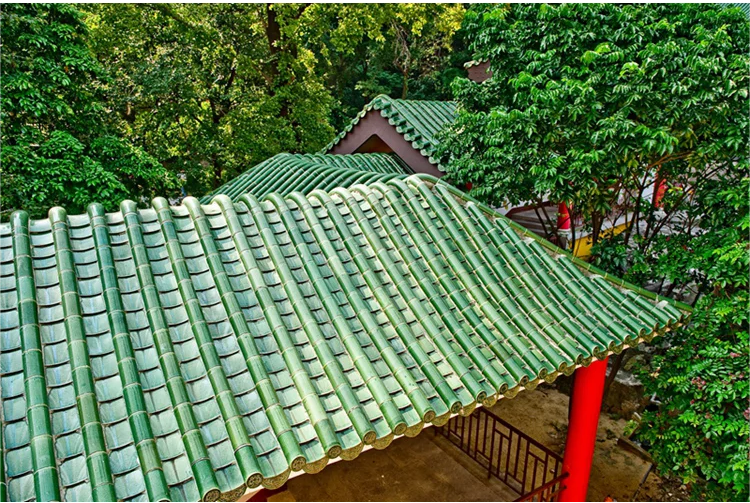
In traditional Chinese buildings, the roof is an important part of the architectural composition. Its slope, eaves, ridge, and decorative details influence how the entire structure is perceived.
Green glazed roof tiles can emphasize these features through their color and profile. Curved pan and cover tiles create a continuous roof pattern, while glazed eave tiles and decorative ridge components help define the edges and upper outline of the building.
On a pavilion, the roof often becomes the main visual feature against open garden space. On a temple or courtyard building, the tiled roof can form a clear contrast with timber columns, painted beams, brick walls, and stone elements.
The result depends on the proportions of the building and how the roof components are arranged, rather than on tile color alone.
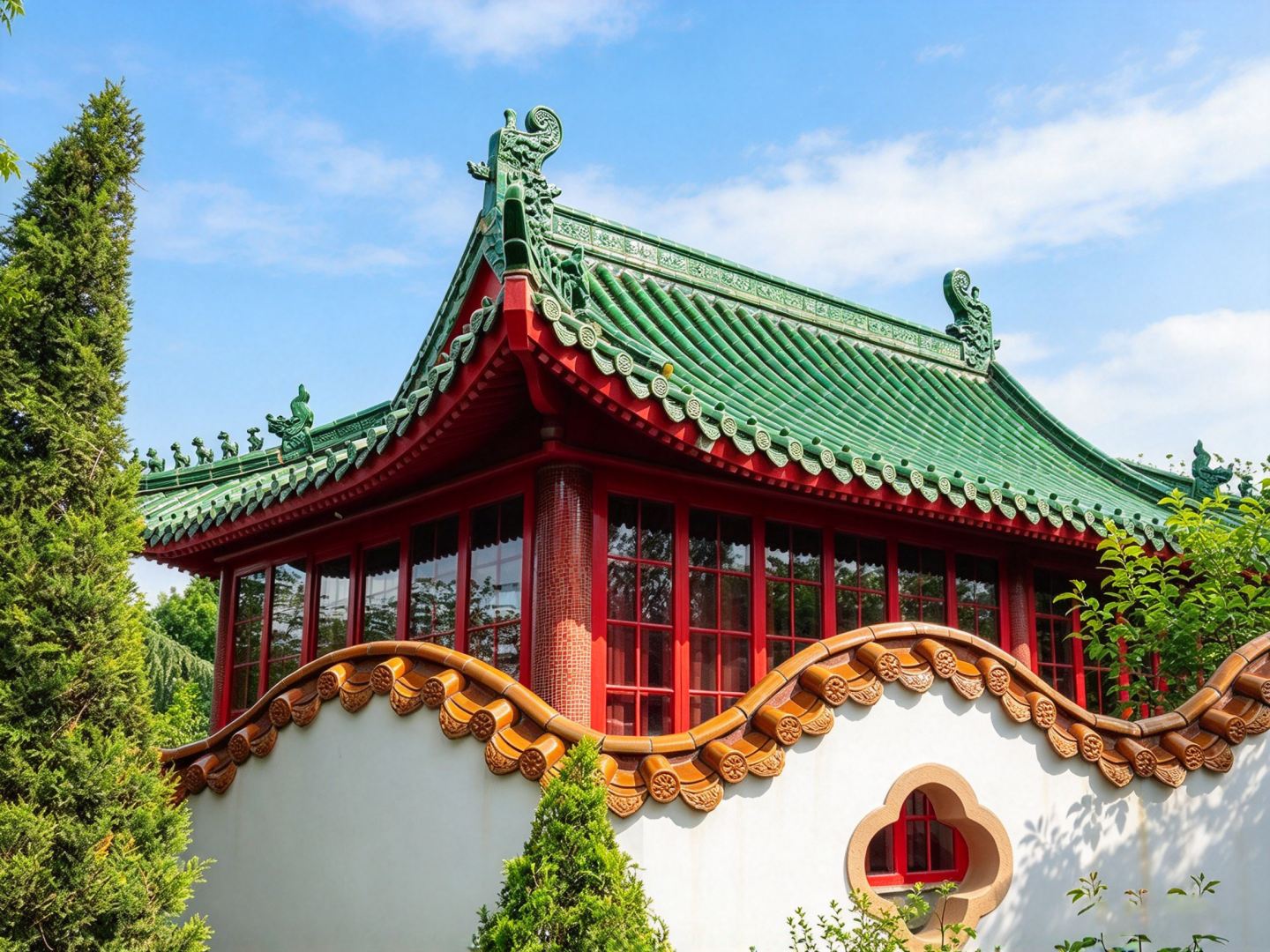
Green glazed clay roof tiles are found in different types of traditional-style architecture. Their use can be considered in several settings:
Garden pavilions: Green roofs provide a visual connection with trees, plants, and other landscape elements.
Temple buildings: Glazed surfaces and traditional roof profiles help maintain a recognizable architectural character.
Courtyard structures: Green tiles can complement timber details, brick walls, and decorative screen walls.
Cultural and heritage-inspired projects: They can be incorporated into new buildings that draw on traditional Chinese architectural forms.
In contemporary landscape design, these tiles may also be used selectively. A pavilion, entrance structure, or garden feature can introduce traditional roof details without requiring every building element to follow a historical style.
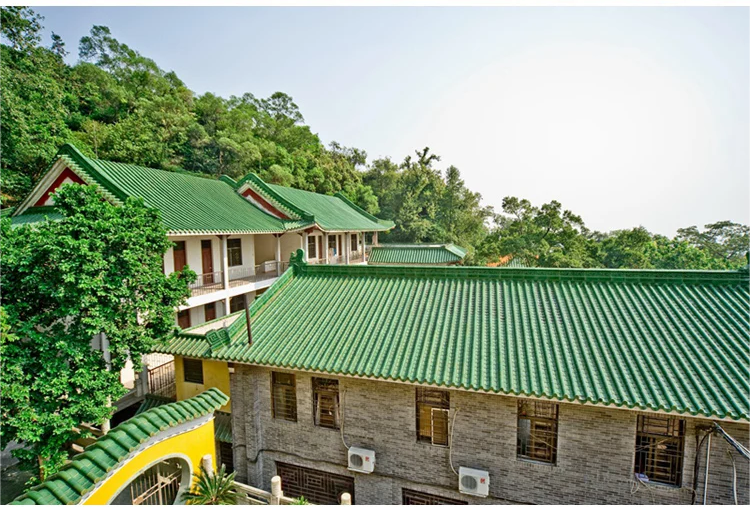
A successful green glazed tile roof requires coordination between the roof shape, tile profile, and supporting structure.
Color should be considered alongside the building's timber finish, wall materials, and landscape setting. It is also useful to review physical tile samples under natural light, since photographs and screens may not show the glaze tone accurately.
The roof design should account for the appropriate pan tiles, cover tiles, eave details, ridge components, and drainage arrangement. These elements need to work together as part of the complete roofing design.
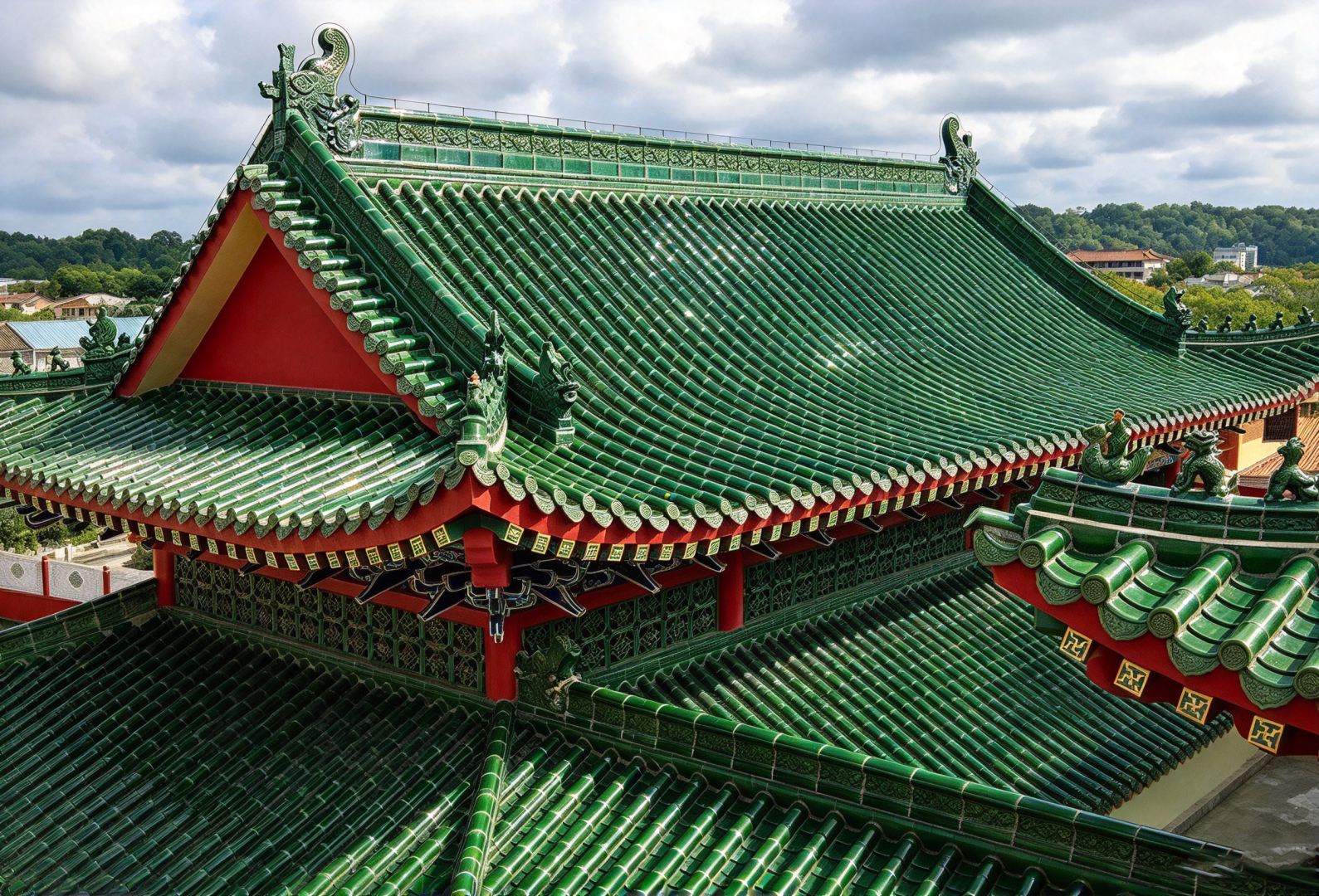
Green glazed roof tiles are distinctive because they bring together color, surface finish, and traditional roof forms. Their visual character can complement garden pavilions, temples, courtyards, and other buildings influenced by Chinese architectural design.
Understanding how the tiles interact with the roof structure and surrounding materials helps designers create a more balanced architectural composition.