- Call Us :+86 13663796880
- Email :nicole@sfrooftile.com
- Working hours :24 hours a day
- Language :Chinese

Nicole Zhang
+86 13663796880
+86-379-63262958
nicole@sfrooftile.com
In traditional Chinese architecture, a roof is more than a shelter from the elements. Its structure and decorative details reflect traditional craftsmanship, aesthetic values and cultural beliefs. The expression “Five Ridges and Six Beasts” (wǔ jǐ liù shòu) is often used to describe these distinctive roof features. But what does it actually mean?
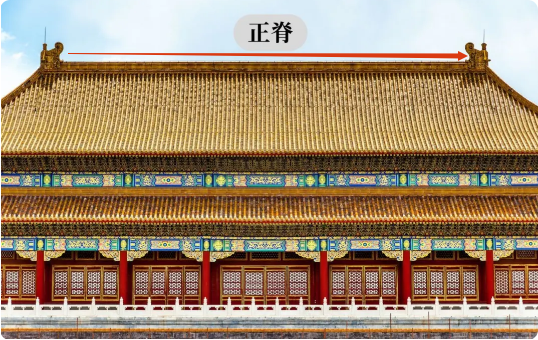
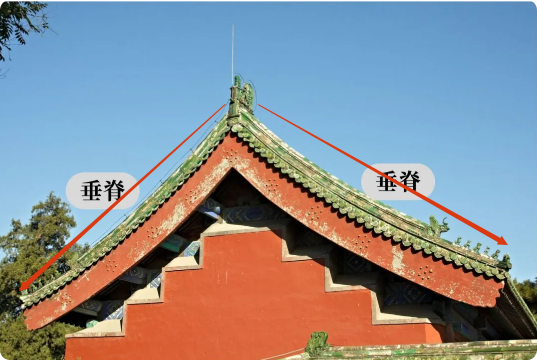
The “Five Ridges” generally consist of one main ridge (zhèng jǐ) and four sloping ridges (chuí jǐ). This arrangement is characteristic of the traditional Chinese hip roof, creating the recognizable ridge lines that define its shape.
Main Ridge (Zhèng Jǐ, 正脊): The main ridge runs along the highest part of the roof, where the two principal roof slopes meet. Ridge tiles and related components cover this junction, helping protect it from rainwater while giving the roof a finished appearance. Main ridges appear on several traditional Chinese roof types, including gable roofs, overhanging gable roofs, hip-and-gable roofs and hip roofs. Curved-roof forms such as juǎnpéng may have a different configuration without a conventional main ridge.
Sloping Ridges (Chuí Jǐ, 垂脊): These ridges extend downward from the upper roof area toward the roof corners. On a traditional hip roof, four sloping ridges connect with the main ridge to form the five-ridge arrangement. Their tiled coverings help finish the roof junctions and contribute to the building's overall appearance.
Not every traditional Chinese roof follows this exact arrangement. The number and layout of ridges depend on the roof type and its architectural design.
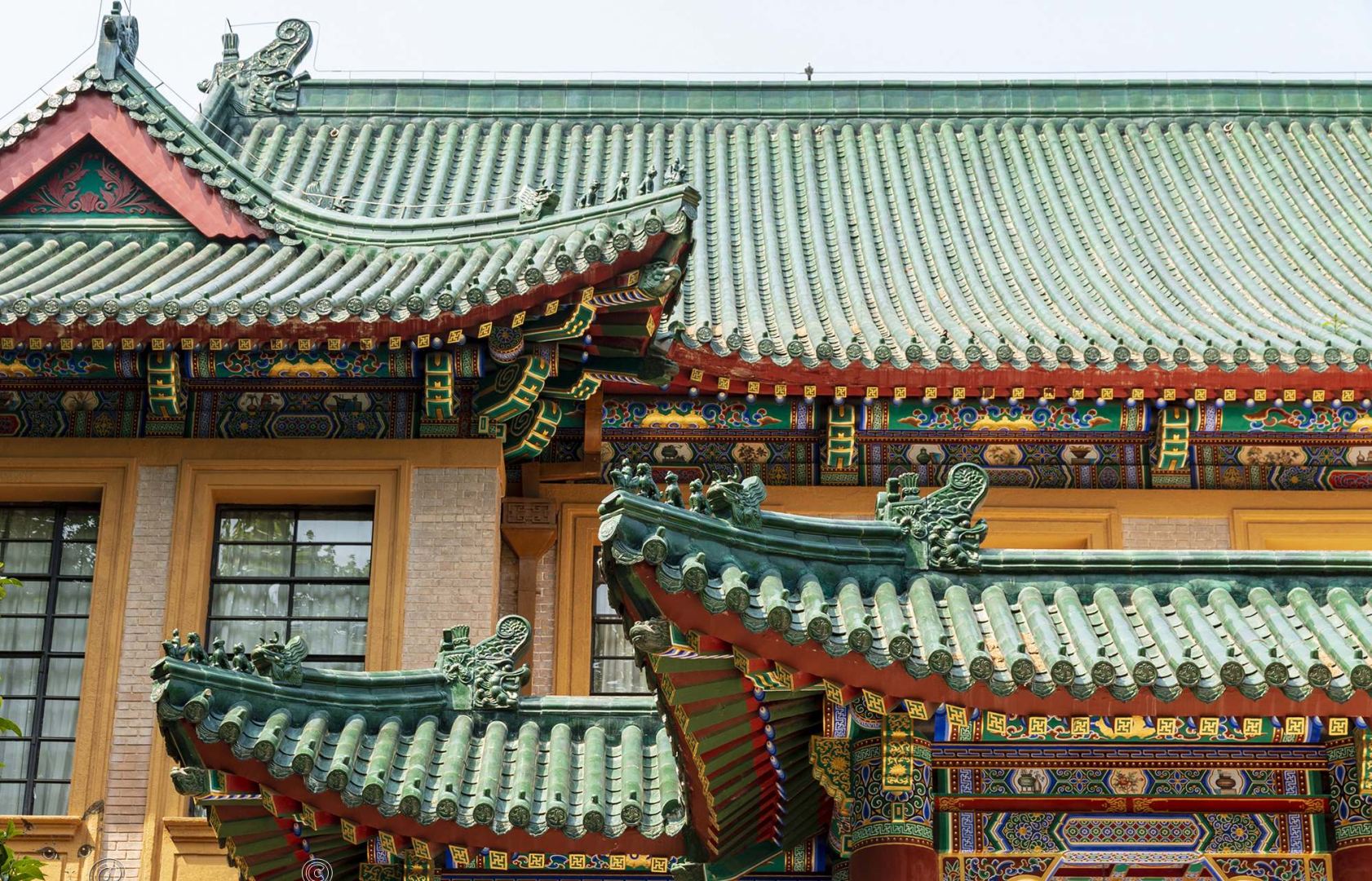
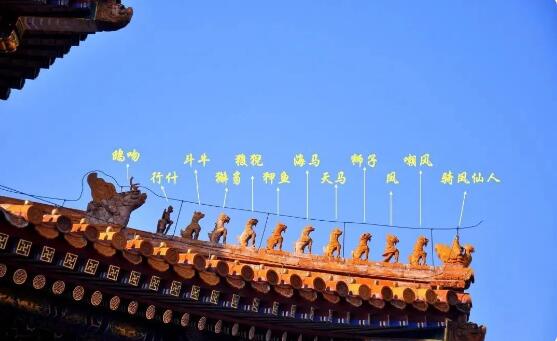
The term “Six Beasts” (liù shòu) does not refer to a fixed group of exactly six mythical creatures. It is associated with the decorative animal figures placed along traditional Chinese roof ridges, including ridge-end ornaments and smaller beasts arranged along sloping ridges.
The Hall of Supreme Harmony (Tài Hé Diàn) in Beijing's Forbidden City is a famous example, featuring ten ridge beasts in its distinctive roof ornament sequence. These figures include the dragon, phoenix, lion, heavenly horse, sea horse, suānní, fish, xièzhì, dòuniú and hángshí. Their number and arrangement reflect the building's exceptional status in imperial architecture.
Each creature carries traditional symbolic meaning. The dragon represents imperial authority, while the phoenix is associated with auspiciousness. The lion symbolizes majesty and guardianship; the heavenly horse suggests the ability to travel great distances. Other mythical creatures are traditionally linked with incense, rain, justice or protection against water-related disasters and lightning.
On buildings outside the imperial context, roof decorations could include simpler auspicious animals and treasure-vase motifs. These ornaments reflected people's hopes for good fortune, successful harvests, family prosperity and well-being.
The Five Ridges and Six Beasts illustrate how traditional Chinese architecture combines roof construction with decorative symbolism. The ridges define the roof's structure and outline, while the mythical figures express cultural beliefs and architectural status. Together, they remain distinctive features of China's traditional architectural heritage.