- Call Us :+86 13663796880
- Email :nicole@sfrooftile.com
- Working hours :24 hours a day
- Language :Chinese

Nicole Zhang
+86 13663796880
+86-379-63262958
nicole@sfrooftile.com
Terracotta screen blocks offer a distinctive way to shape architectural spaces without relying on solid walls. Made from fired clay, these decorative blocks combine natural material texture with repeating patterns, allowing light, shadow, and views to become part of the design.
From garden boundaries to courtyard walls and traditional-style pavilions, terracotta screen blocks can connect buildings with their surroundings. Their visual effect becomes especially interesting when used alongside a wooden structure and traditional Chinese roof tiles.
One of the defining features of terracotta screen blocks is their earthy appearance. The warm red or reddish-brown tones of fired clay can complement timber, stone, greenery, and other natural materials.
Unlike a plain wall, a screen wall introduces a repeated pattern across the surface. Depending on the block design and arrangement, the pattern may appear geometric, traditional, or more contemporary.
The result depends not only on the block itself, but also on how it is laid out. Repeating the same pattern creates visual rhythm, while the surrounding materials determine whether the wall feels rustic, formal, or modern.
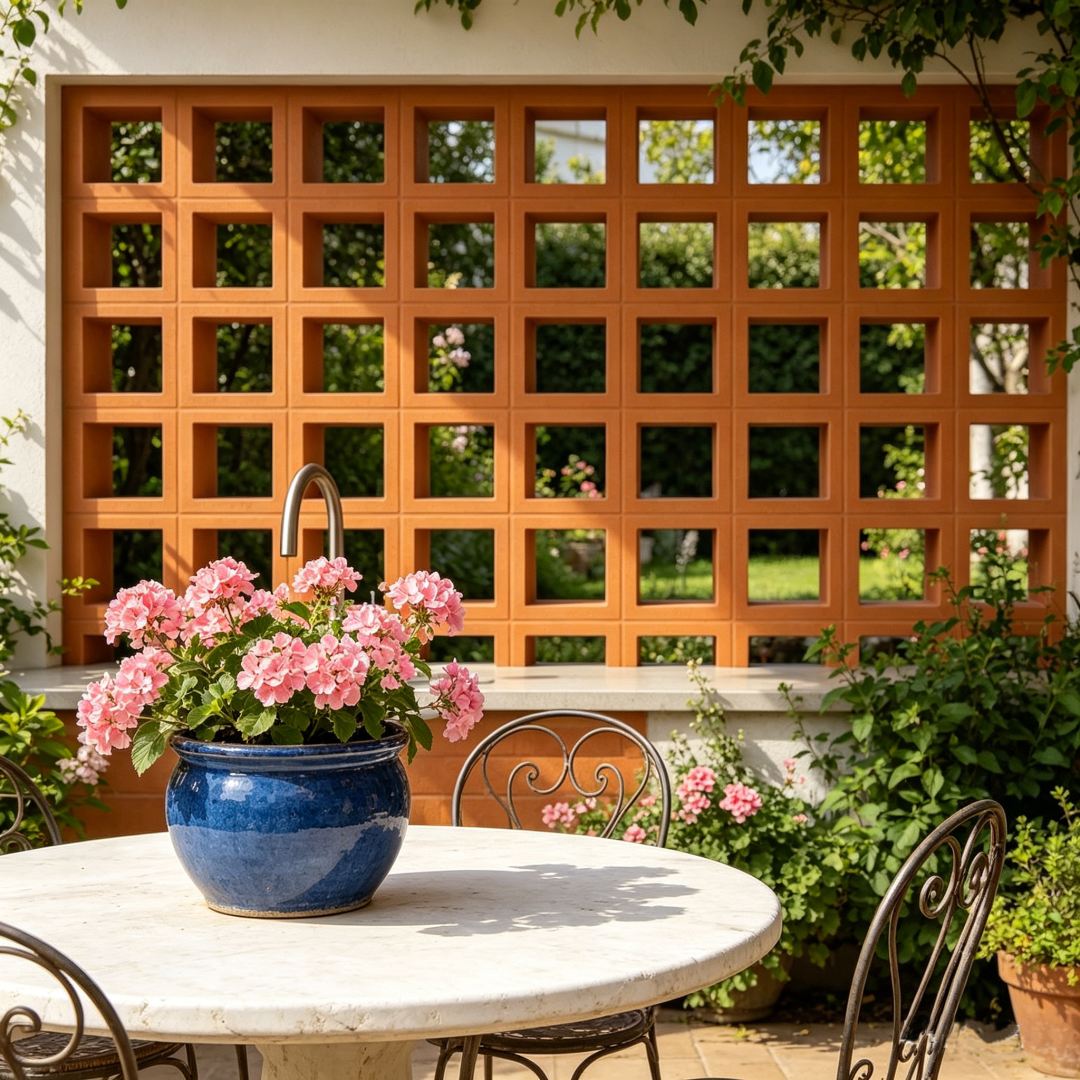
The openings in terracotta breeze blocks allow light to pass through the wall. As sunlight changes throughout the day, the patterns cast different shadows on nearby floors, walls, and planting areas.
This makes a terracotta screen wall more than a decorative surface. It can become an active part of the space, creating changing visual details without adding extra ornament.
For garden and courtyard projects, designers can consider the direction of sunlight, the size of the openings, and the viewing distance when selecting a pattern. These details influence the balance between visual openness and privacy.
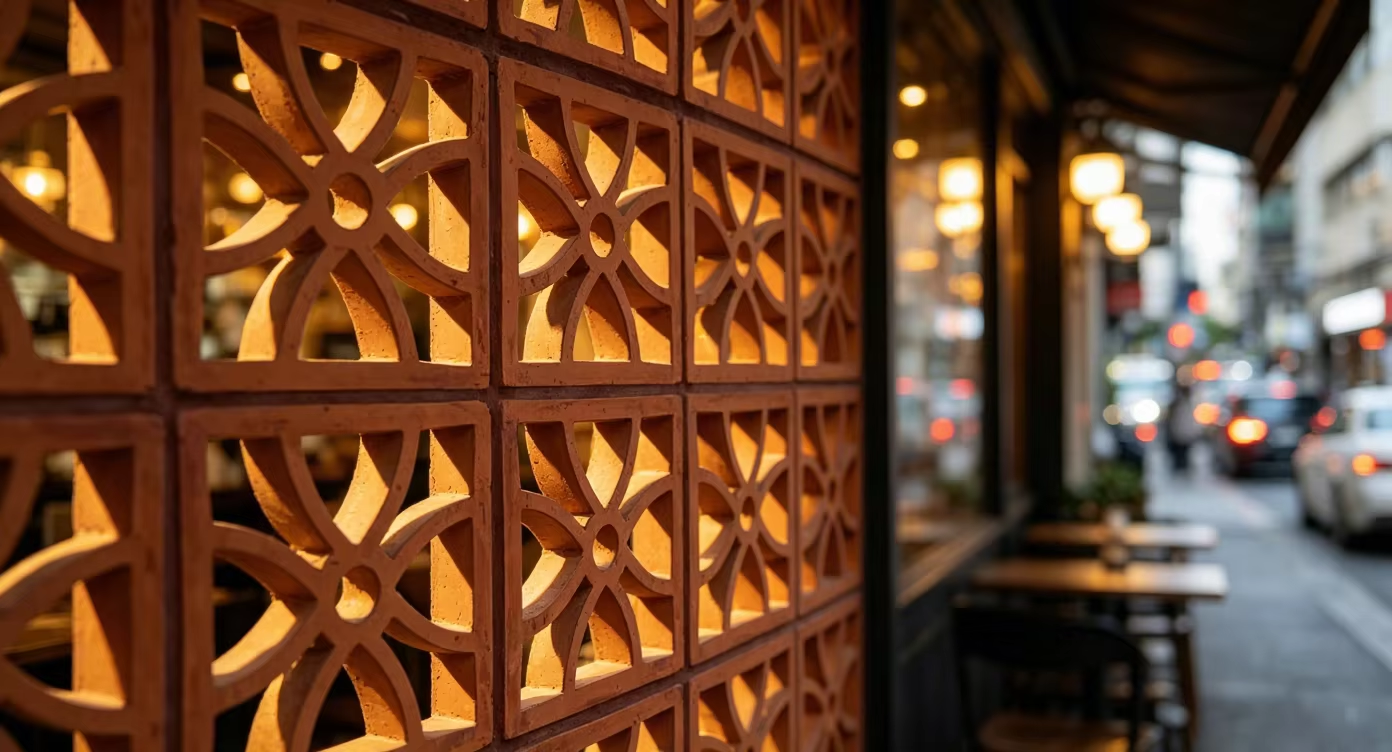
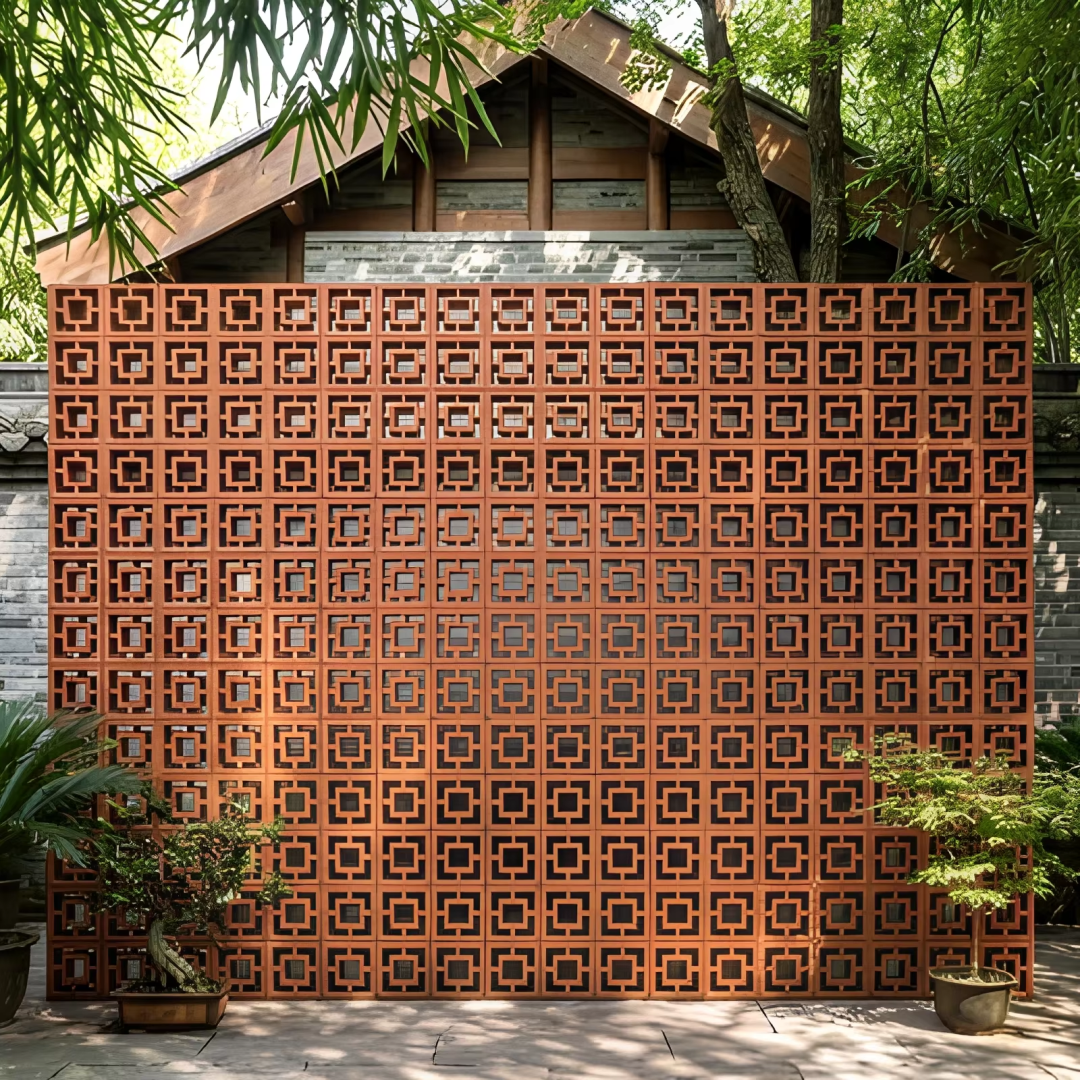
Terracotta screen blocks can work particularly well with traditional architectural elements, including wooden structures and Chinese roof tiles.
A timber pavilion provides an open, lightweight framework, while Chinese roof tiles define the roofline and contribute a distinctive traditional character. A terracotta screen wall can complement this arrangement by introducing texture and patterned surfaces at ground level.
For example, a garden pavilion may combine timber columns, a grey-tile roof, and a terracotta screen wall along one side. The wood adds warmth, the roof establishes the architectural silhouette, and the screen blocks create a transition between the sheltered area and the garden.
These materials do not need to be used together in every project. The appropriate combination depends on the building style, landscape setting, and intended use of the space.
Terracotta screen blocks can be considered for several architectural and landscape applications:
Garden boundaries: Create a patterned edge between planting areas and outdoor spaces.
Courtyard walls: Add visual interest without forming a completely solid surface.
Pavilion surroundings: Complement timber structures and traditional tiled roofs.
Outdoor seating areas: Introduce partial screening while maintaining a visual connection with the landscape.
Decorative architectural features: Use repeated patterns to add texture to selected wall sections.
The final design should account for the required level of privacy, local weather conditions, wall height, and structural support.
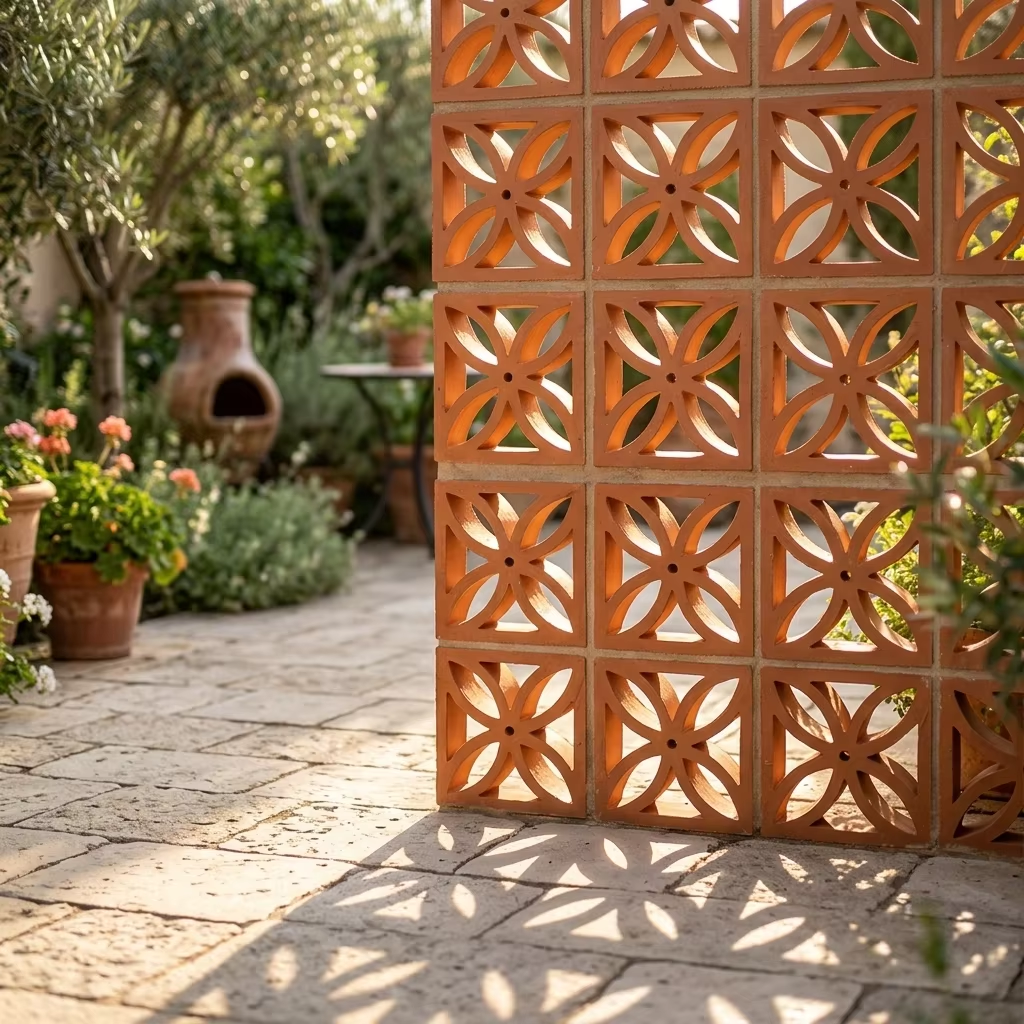
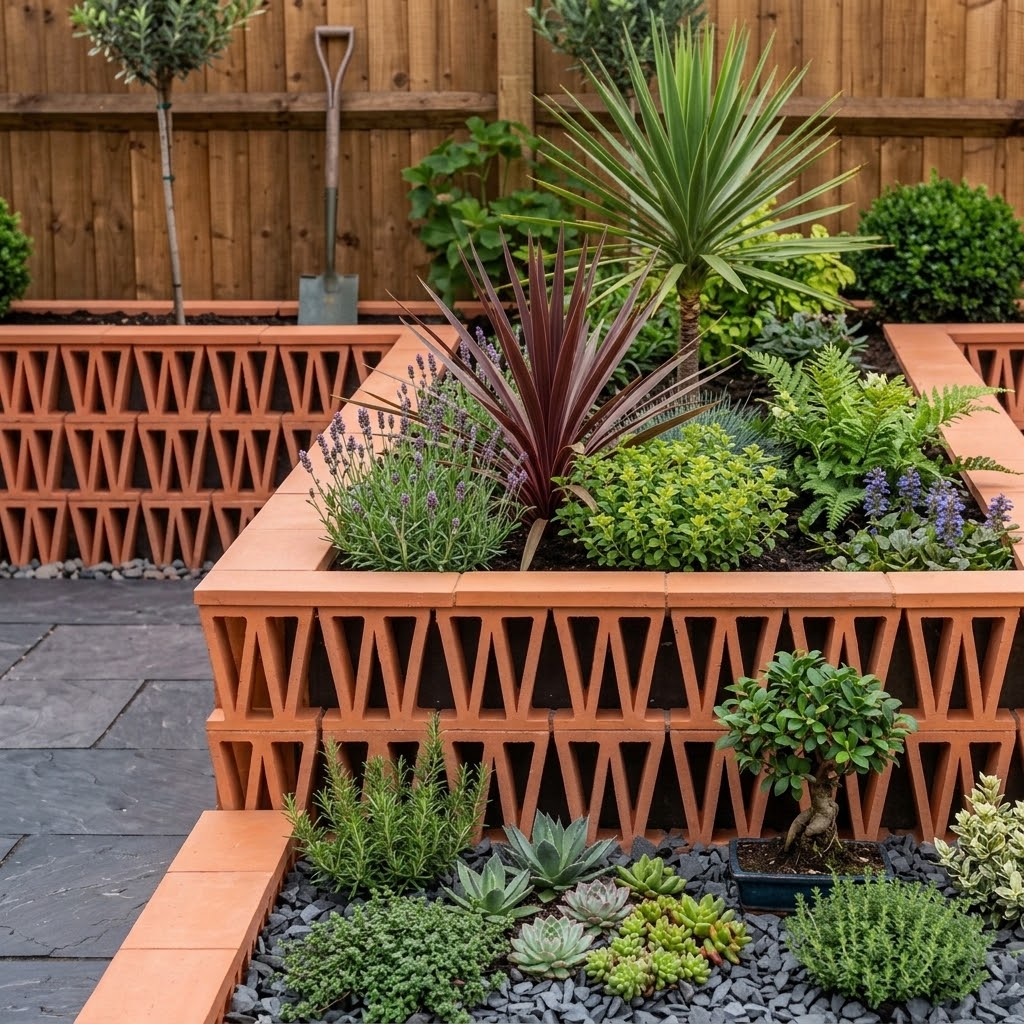
Before selecting terracotta screen blocks, consider three practical factors: pattern, scale, and installation.
A small, detailed pattern may create a different visual effect from a larger, more open design. Block dimensions and opening sizes also affect the overall appearance of the wall. For taller or freestanding screens, the supporting structure and installation method should be assessed for the specific project.
It is also worth reviewing the blocks alongside other proposed materials. A sample placed near the selected timber, roof tiles, or paving can help designers evaluate how the colors and textures work together.
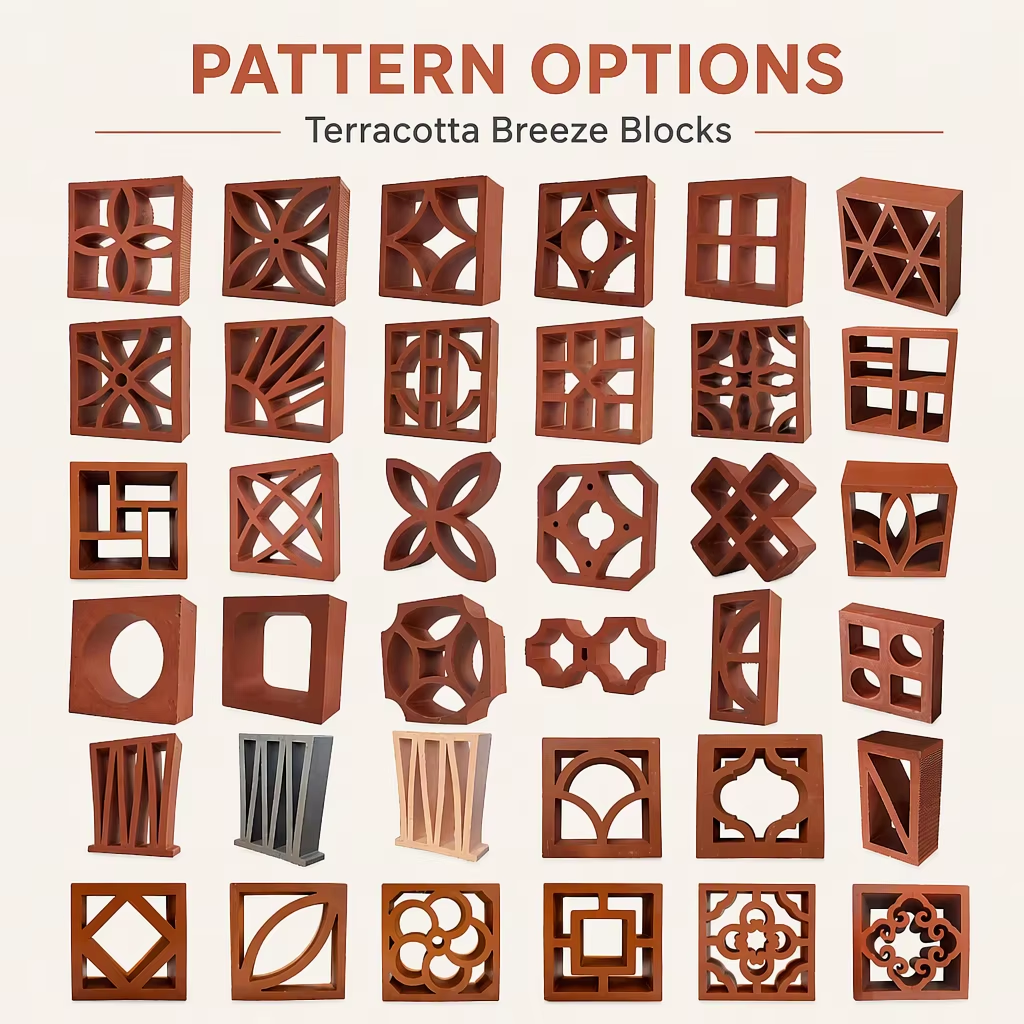
Terracotta screen blocks are valued not only for their decorative patterns, but also for the way they interact with light and surrounding materials. When thoughtfully combined with wooden structures and Chinese roof tiles, they can help create spaces that feel connected to traditional architectural forms while remaining suitable for contemporary gardens and landscapes.
The most successful design usually begins with the character of the space itself: its light, materials, proportions, and relationship with the landscape.