- Call Us :+86 13663796880
- Email :nicole@sfrooftile.com
- Working hours :24 hours a day
- Language :Chinese

Nicole Zhang
+86 13663796880
+86-379-63262958
nicole@sfrooftile.com
Upon approaching a traditional Chinese residence, one often encounters a wall first. It has no roof of its own and does not enclose the courtyard. Instead, it stands independently just inside the entrance, directly facing the main gate. In architectural terminology, this structure is known as a screen wall, also called a shadow wall or facing wall.
Its primary function is to screen the interior from direct view. Without it, the inner courtyard would be fully exposed whenever the main gate opened. The wall interrupts the line of sight, preserving the distinction between the outside world and the private interior.
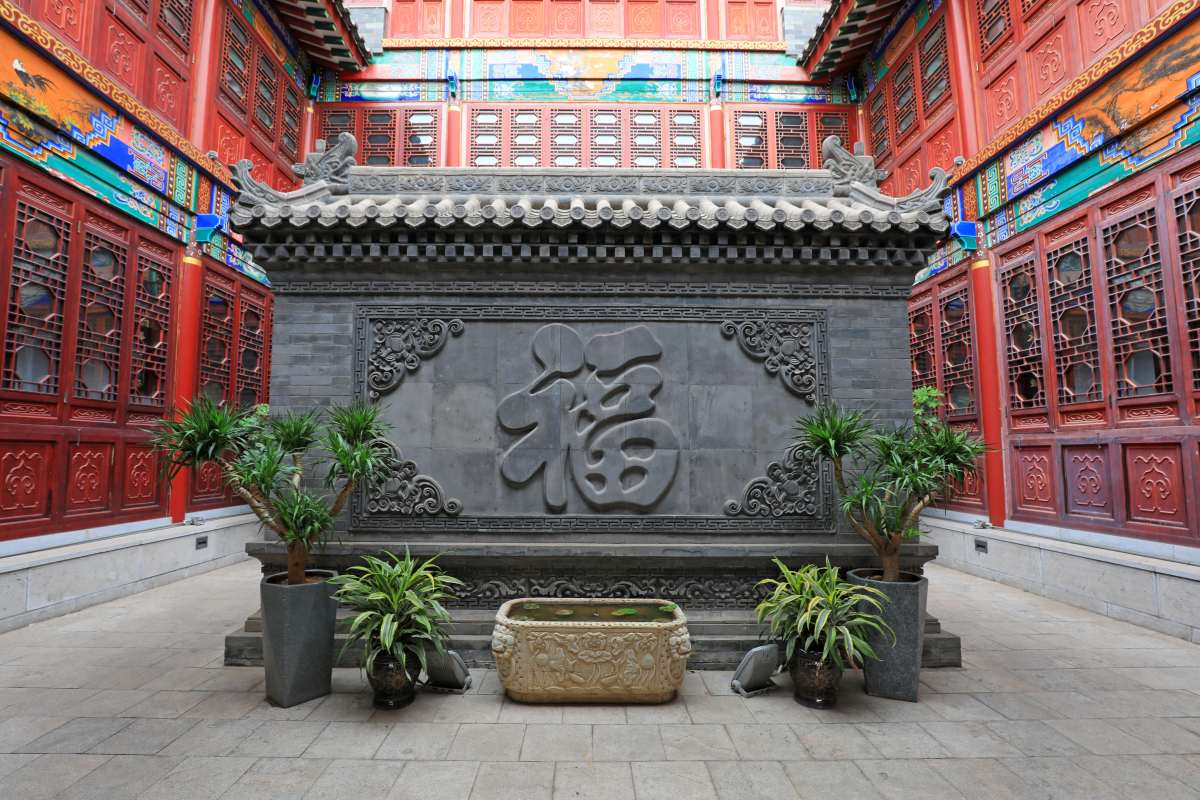
Its second function is connected with traditional Chinese beliefs. In folk traditions, qi (vital energy) should not flow directly and forcefully into a home, a concern that is particularly relevant when the entrance faces a lane or street. A screen wall is believed to redirect the flow of qi and obstruct harmful influences. Regardless of whether one subscribes to these beliefs, they have clearly influenced the placement and design of screen walls in traditional Chinese architecture.
Although essentially a wall, a traditional screen wall can be constructed with the detail and refinement of a small architectural feature. Its base may take the form of a Sumeru pedestal, with carefully crafted elements such as corner moldings, horizontal rails, and a recessed waist section. The central body may be built from square bricks using traditional techniques such as dry-stacking or thread-seam masonry, producing exceptionally fine joints. Above it, a tiled roof—typically a gable roof or an overhanging gable roof—may be finished with decorative ridge ornaments.
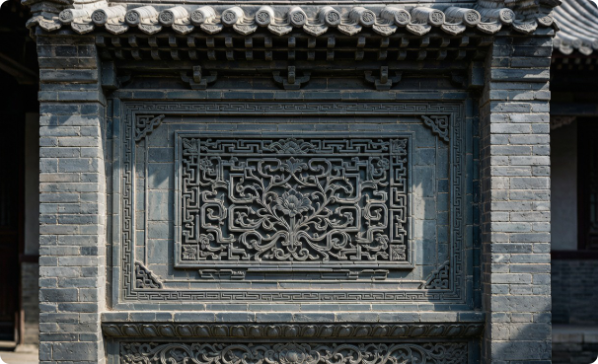
The decoration of the wall follows established conventions. The central square panel is known as the “box,” while the four corner areas are referred to as “branching corners.” These sections often feature concentrated brick carvings or glazed decorative ornaments. Common motifs include flowers, auspicious animals, bogu (arrangements of antique objects), and auspicious inscriptions. Techniques range from finely jointed brickwork and brick carving to applied ornament and glazed tile decoration. The complexity of the design historically varied with the owner's status and resources.
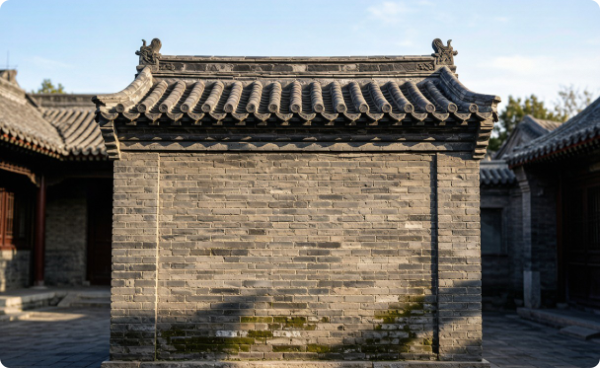
The detail found in traditional brick-carved screen walls can be remarkable. In regions such as Shanxi and Huizhou, screen walls associated with gable ends may feature intricate carvings in grey brick, depicting multi-story pavilions, figures, and architectural scenes with a striking sense of depth.
Creating such carvings requires carefully prepared bricks made from refined clay. Artisans then shape the designs layer by layer with chisels and knives. Because the material is difficult to repair once carved, the process demands considerable precision and skill.
The glazed Nine-Dragon Wall represents another remarkable expression of screen wall craftsmanship. One famous example stands in front of the Gate of Tranquil Longevity (Ningshoumen) in Beijing's Forbidden City and dates to the Qianlong period. Its surface depicts nine coiling dragons among clouds, rendered in multicolored glazed tiles. The central dragon is flanked symmetrically by dragons in ascending and descending poses.
A story associated with this wall claims that one dragon's belly was damaged during firing. With insufficient time to produce a replacement, artisans reportedly carved a substitute from wood and painted it to match the surrounding glazed decoration. The story's historical accuracy is debated, but it illustrates the challenges of producing glazed architectural components, which require careful control of dimensions, glaze color, and deformation during firing.
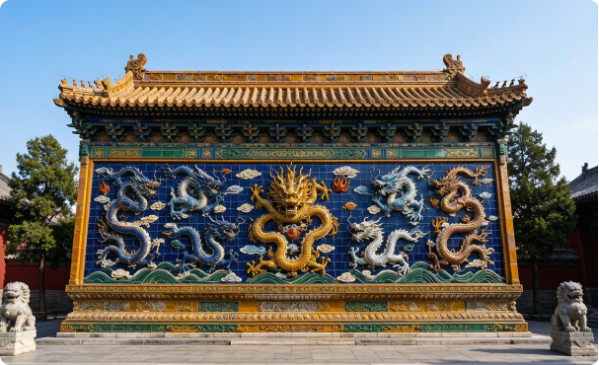
From a single carved brick panel on a residential screen wall to the multicolored glazed tiles of an imperial Nine-Dragon Wall, these structures span a wide range of architectural settings and levels of ornamentation. Yet their fundamental role remains the same: to create a pause between the entrance and the courtyard, turning arrival into a gradual spatial experience.
Traditional Chinese architecture often avoids a direct, unobstructed view from the main entrance through to the inner courtyard. The screen wall offers one of the clearest examples of this spatial philosophy, combining privacy, traditional beliefs, architectural craftsmanship, and visual composition in a single structure.