- Call Us :+86 13663796880
- Email :nicole@sfrooftile.com
- Working hours :24 hours a day
- Language :Chinese

Nicole Zhang
+86 13663796880
+86-379-63262958
nicole@sfrooftile.com
A traditional Chinese pavilion is made up of many coordinated parts. For a custom project, the process involves much more than producing a wooden frame and supplying clay roof tiles. From the first reference image to final packing, each stage needs to be checked against the customer's requirements.
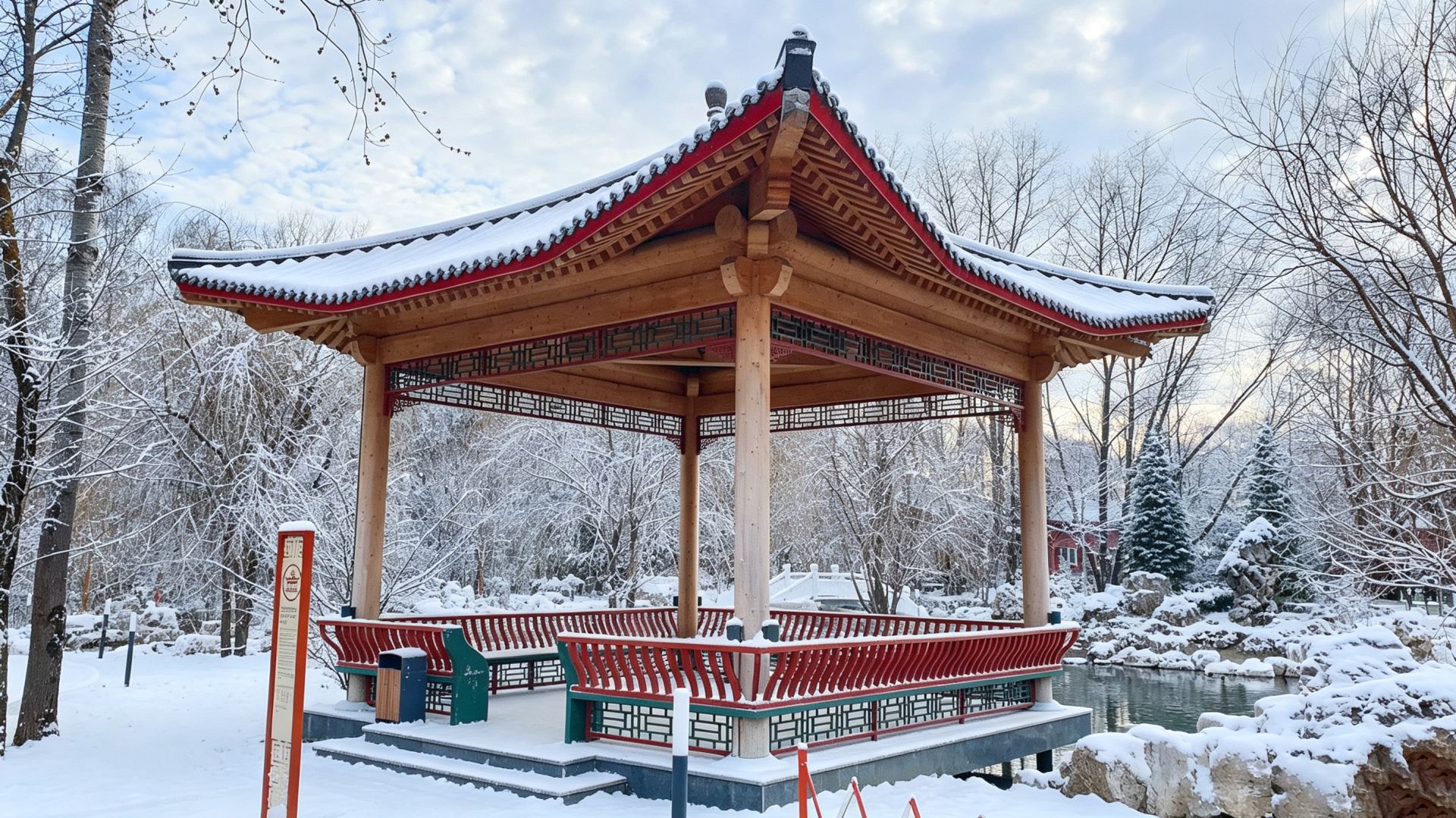
The process begins when the customer sends us a reference image of the Chinese-style pavilion they want to build.
At this stage, we discuss the required overall dimensions, pavilion shape, roof style, wood color, decorative details, clay roof tile type, and other project requirements. The customer's reference image provides the visual direction, while the final specifications determine how the pavilion will be produced.
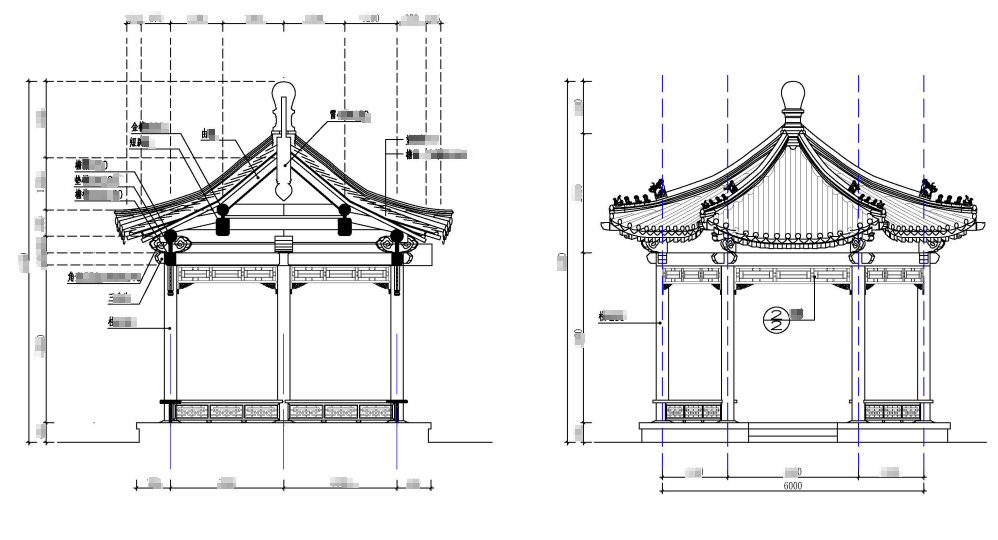
After confirming the project requirements, our technical team prepares a production drawing.
The drawing normally includes rendered views to show the expected appearance, together with dimensional drawings for individual structural components. Important details such as column sizes, beam dimensions, roof proportions, decorative elements, and connection positions are defined before production begins.
The customer reviews the drawings first. Production starts after the design has been confirmed.
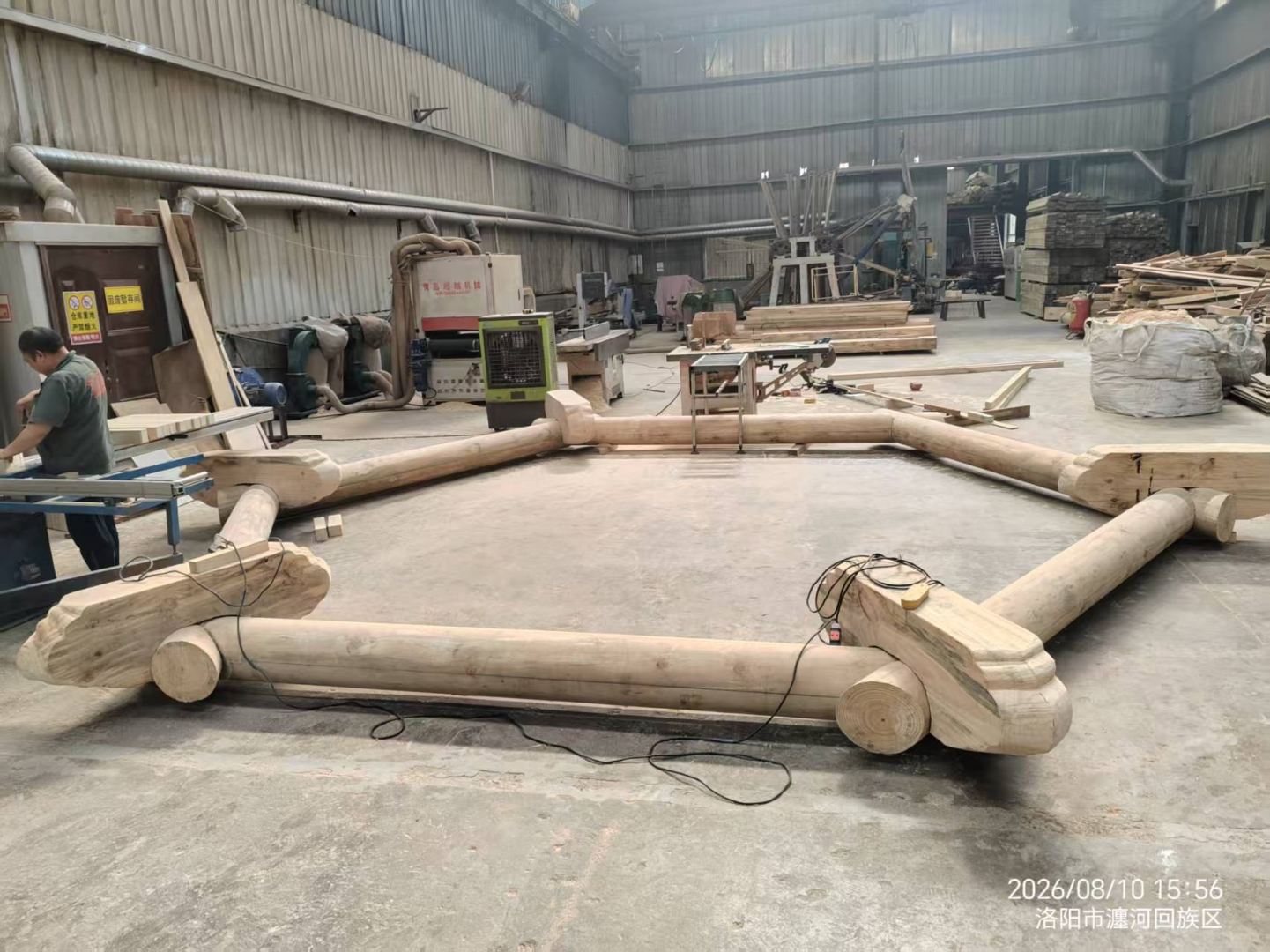
The approved drawings are then transferred to the production team. Wooden columns, beams, roof members, decorative components, and other parts are prepared according to the specified dimensions.
For a traditional-style pavilion, proportion is particularly important. The roof size, eave projection, column spacing, and overall height need to work together as one structure.
Where required for international shipment, the wooden components go through the appropriate fumigation process and related export preparation.
This stage is important because wooden packaging and timber products shipped internationally may need to meet the destination country's import requirements. The relevant treatment and documentation are arranged according to the project and shipping requirements.
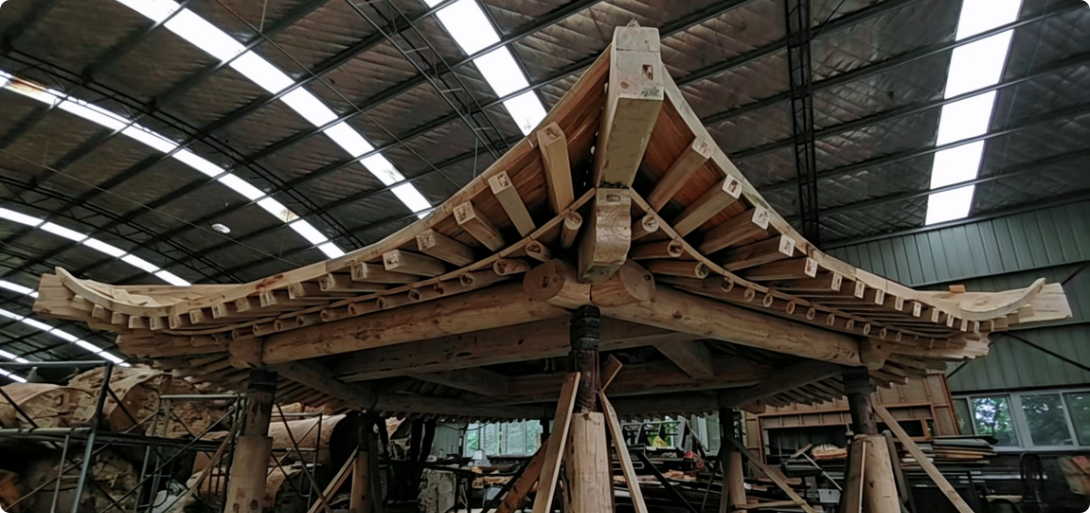
One of the most important steps is the trial assembly.
Instead of sending an unassembled wooden structure directly to the customer, we first assemble the pavilion at the factory. This allows our team to check the relationship between different components, confirm the fit of the structure, and identify any issues before shipment.
During production, we also provide customers with progress photos and videos so they can follow the project remotely.
After the first assembly is completed, we prepare a color and decorative painting sample for customer approval.
The sample shows the proposed colors and decorative patterns for different parts of the pavilion. This gives the customer an opportunity to adjust the color combination or decorative details before the final hand-painting process.
Once the sample is approved, skilled workers begin the corresponding painting work.
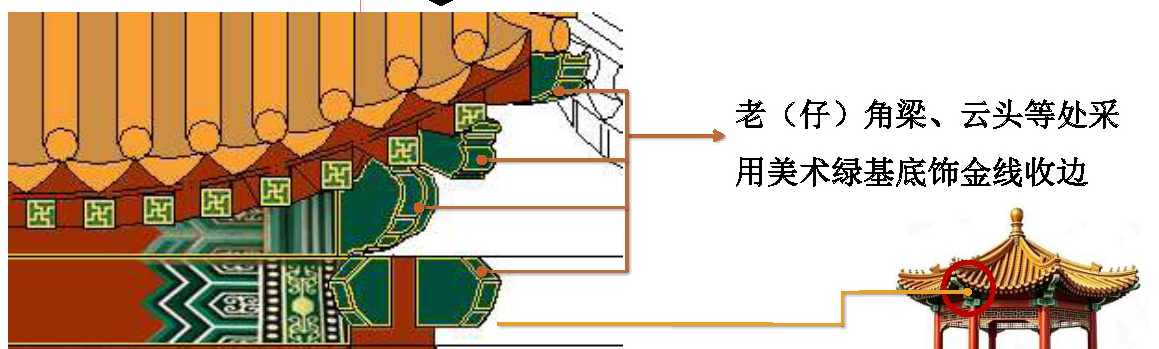
The wooden components are painted according to the approved design.
After painting is completed, the pavilion is assembled again for a second inspection. The customer can visit the factory for an on-site check or participate through photos and video.
This second confirmation is particularly useful for custom projects because the customer can review the overall appearance before the pavilion is dismantled for shipment.
After final approval, the pavilion is carefully dismantled.
Each component is marked according to its position and organized by part name. Installation information is prepared so that the customer can identify the corresponding columns, beams, roof components, and decorative pieces during assembly at the project site.
The clay roof tiles and related roofing components are packed separately according to the project requirements. The wooden structure and roofing materials are then prepared for international transportation.
The completed shipment includes the prepared wooden pavilion components, clay roof tiles, accessories, part identification, and installation information.
At the project site, the customer or local installation team can use the marked components and installation instructions to reconstruct the pavilion according to the approved design.
For projects requiring additional assistance, communication with our team can continue during installation.
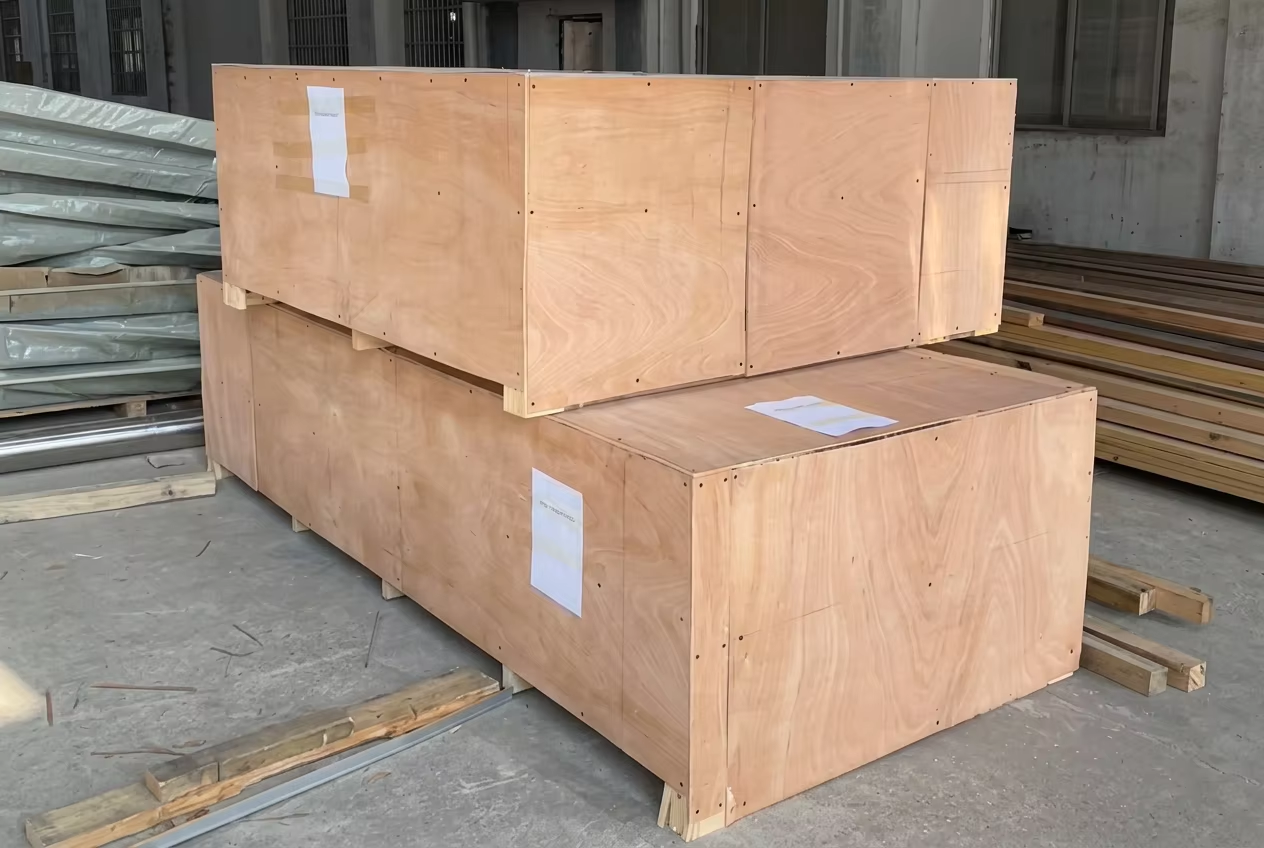
A traditional Chinese pavilion combines timber structure, roof form, clay roof tiles, decorative painting, and many individual components. For a custom project, controlling the process from drawing approval to trial assembly helps reduce misunderstandings between the factory and the customer.
At Dannuo Gardens, we treat each custom pavilion as a project with its own dimensions, details, materials, and installation requirements. The goal is not simply to manufacture a pavilion, but to make sure the finished components correspond with the design that the customer approved before they leave the factory.