- Call Us :+86 13663796880
- Email :nicole@sfrooftile.com
- Working hours :24 hours a day
- Language :Chinese

Nicole Zhang
+86 13663796880
+86-379-63262958
nicole@sfrooftile.com
A traditional Chinese pavilion is more than a small garden shelter. Its distinctive character comes from the relationship between the wooden structure, Chinese roof tiles, roof form, and traditional craftsmanship. From classical gardens to modern landscape projects, these elements work together to create a recognizable architectural form.
The basic structure of a traditional Chinese pavilion is usually formed by wooden columns, beams, rafters, and roof-supporting members. Unlike an enclosed building, a pavilion is generally designed as an open or semi-open space, allowing people to remain connected with the surrounding landscape.
The arrangement of the columns is particularly important. Square, hexagonal, and octagonal plans create different proportions and visual rhythms. The height, column spacing, roof size, and eave projection also need to work together rather than being considered separately.
Traditional timber construction is associated with joinery techniques, including mortise-and-tenon principles, where structural members are carefully fitted together. In modern production, traditional visual features may be combined with contemporary fabrication and installation methods according to project requirements.
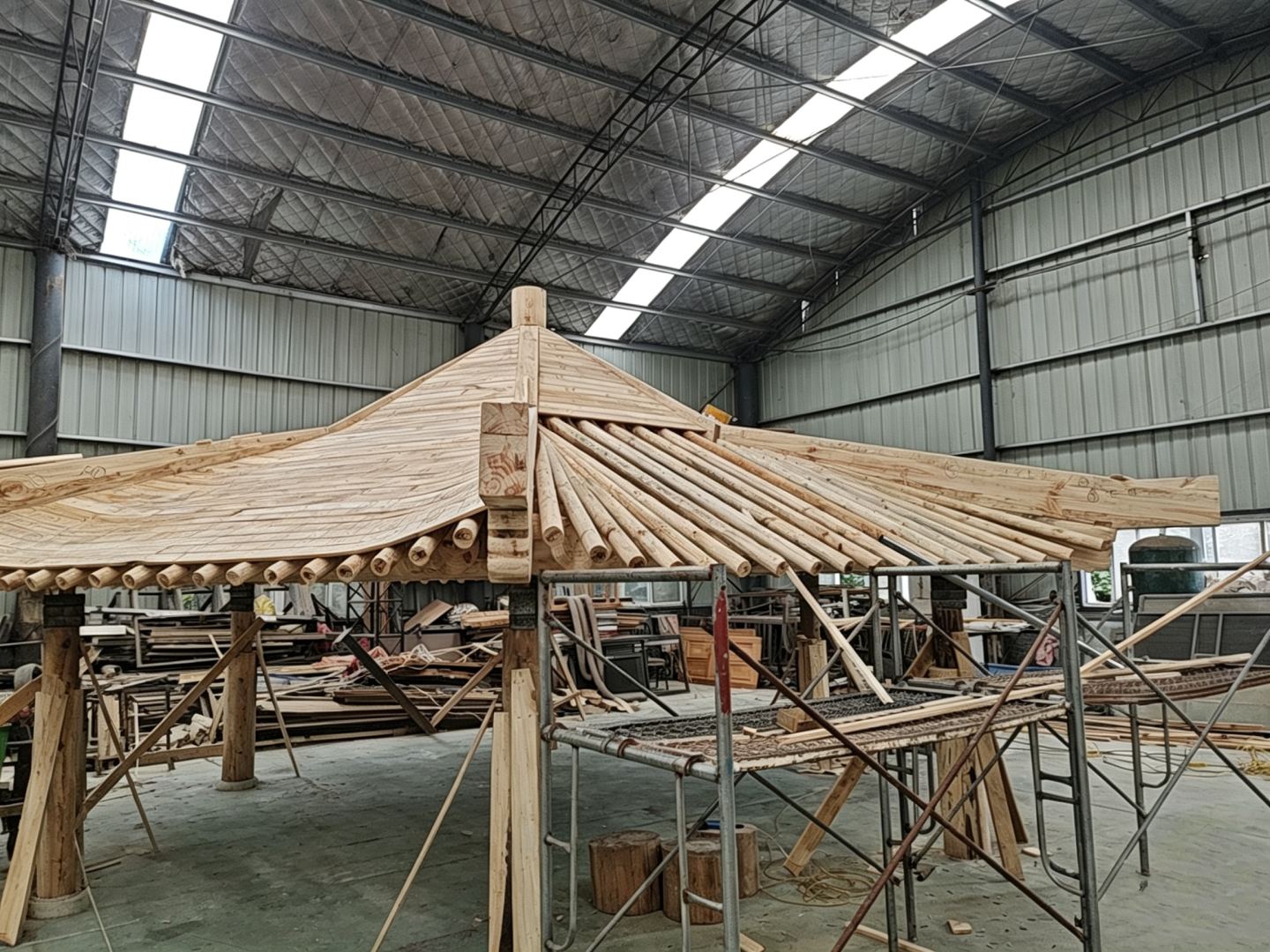
The roof is one of the most recognizable features of a Chinese wooden pavilion. Its curved profile, extended eaves, and layered roof components give the structure much of its traditional character.
Chinese roof tiles are commonly used when an authentic tiled roof appearance is required. Depending on the architectural style, a pavilion may use grey clay roof tiles or glazed roof tiles in colors such as green, blue, or yellow.
A complete pavilion roof can contain more than the main field tiles. Depending on the design, it may also include eave tiles, drip tiles, ridge tiles, ridge ornaments, decorative end pieces, and roof finials. These components help form the visual details of traditional Chinese architecture.
The roof should also be considered from a practical perspective. Tile weight, roof structure, drainage, local climate, transportation, and installation method can all influence the final design.
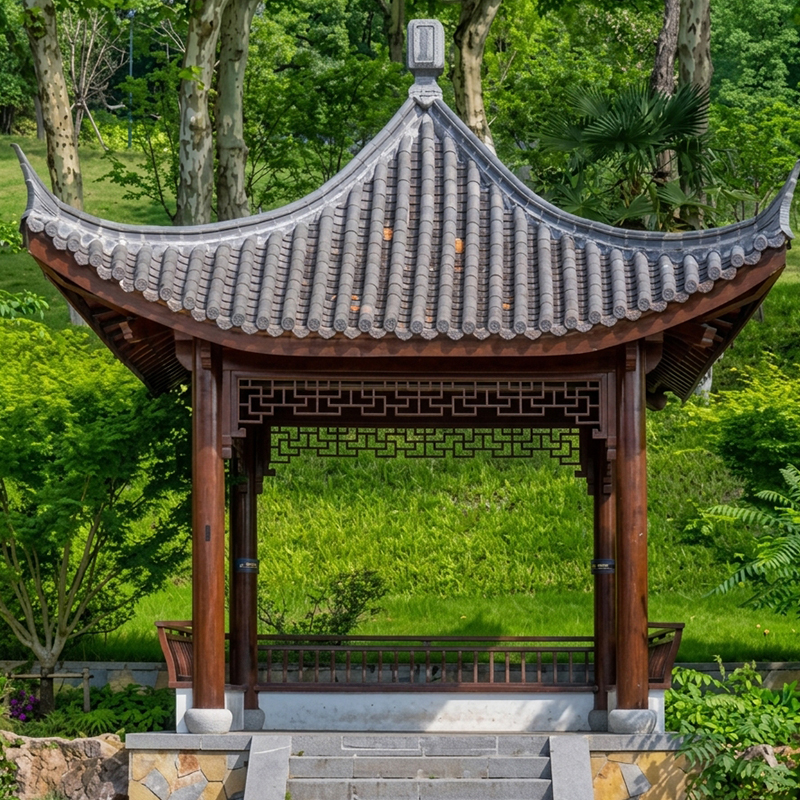
The appearance of a traditional pavilion depends on details that are easy to overlook. Roof tile proportions, eave lines, timber dimensions, decorative elements, and the transition between the roof and supporting structure all affect the final result.
For restoration or historically inspired projects, matching the roof form, tile type, color, and decorative details can be more important than simply choosing a pavilion based on its overall shape.
This is where knowledge of traditional building materials becomes valuable. Roof tiles should be considered as part of the architectural system rather than as an isolated product.
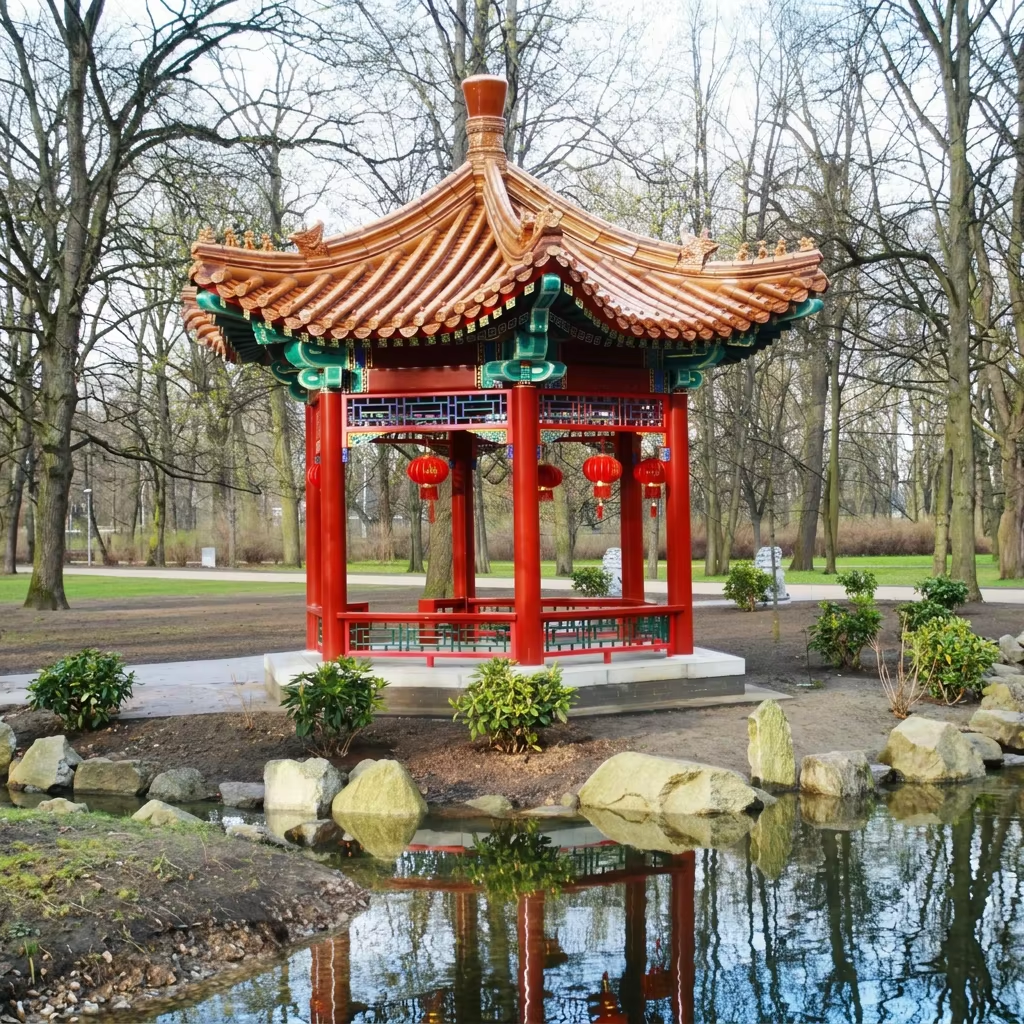
Today, Chinese wooden pavilions can be found in private gardens, Chinese-style gardens, cultural parks, hotels, resorts, tea houses, and landscape projects. Their function may range from a shaded resting area to a visual focal point within a garden.
For a new project, the pavilion's size, structural design, roof material, tile style, landscape setting, and installation conditions should be evaluated together.

The uniqueness of a traditional Chinese pavilion comes from the combination of wooden structure, roof form, Chinese roof tiles, and craftsmanship. The beauty is not created by one decorative feature, but by how these elements work together as a complete architectural composition.
For architects, landscape designers, and project owners, understanding this relationship makes it easier to select a pavilion design that is visually appropriate while also considering structure, roofing materials, and project conditions.