- Call Us :+86 13663796880
- Email :nicole@sfrooftile.com
- Working hours :24 hours a day
- Language :Chinese

Nicole Zhang
+86 13663796880
+86-379-63262958
nicole@sfrooftile.com
At the edge of a pitched roof, rainwater must be directed away from the building. In traditional Chinese architecture, eave tiles and drip tiles perform this important final stage of roof drainage. Although relatively small, these tiles combine practical water management with decorative details that define the roofline.
The eave tile is the terminal piece of the pan tile or barrel tile. It is generally semi-circular, covering the ends of the rafters and completing the outer edge of the roof. Its exposed face may feature molded decorative patterns.
Besides creating a finished appearance, the eave tile helps seal the end of the pan tile and secure the underlying roof tiles. This makes the eave edge both functional and visually consistent.
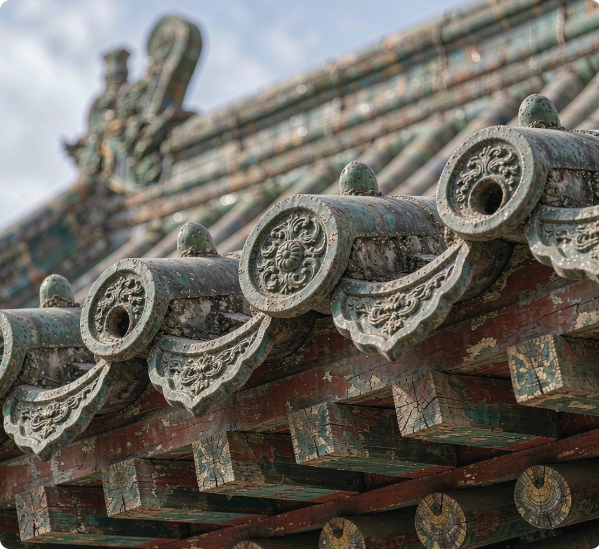
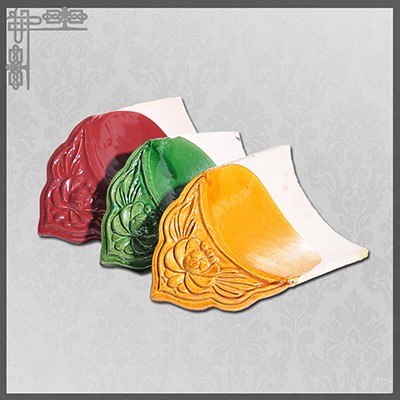
The drip tile is used as the terminal piece for the flat tile. Its front edge has a downward-pointing tip or ruyi cloud-head shape that helps direct rainwater away from the wall.
Instead of allowing water to run along the eaves and down the wall, the drip tile creates a defined point where water can fall clear of the building. This helps reduce prolonged water exposure and erosion at the wall base.
Eave tiles and drip tiles commonly work together at the roof edge. The upper row of barrel tiles is finished with eave tiles, while the lower row of flat tiles uses drip tiles. Their staggered arrangement creates a continuous roof border while supporting effective drainage.
The shape and angle of the drip tile lip are important to drainage performance. If the lip is too vertical, water may remain close to the wall. If it curves upward too sharply, water may splash back toward the building.
Traditional craftsmen considered factors such as the depth of the eave overhang when determining the shape of the drip tile. The objective was to allow water to fall beyond the wall and drainage area. Even small dimensional differences can influence how rainwater leaves the roof.
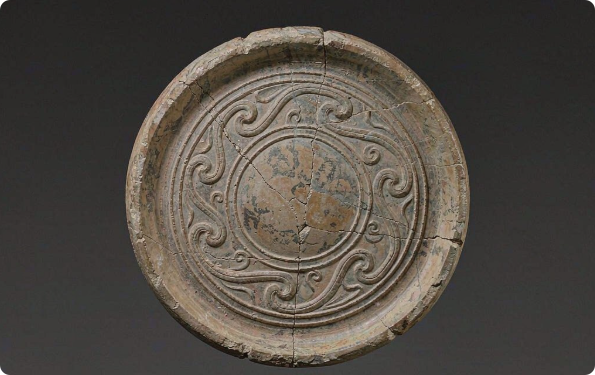
The exposed face of an eave tile also provides an important decorative element. Traditional designs include cloud patterns, lotus flowers, beast masks, and Chinese characters. These motifs varied according to historical period and regional building traditions.
For this reason, eave tiles can also provide useful clues when studying or restoring historic architecture. Han dynasty examples are often associated with cloud motifs and characters; beast-mask designs became prominent during the Six Dynasties period; lotus motifs were widely used during the Tang dynasty; while Ming and Qing dynasty examples often show simpler designs or dragon motifs.
The form of the drip tile also changed over time. Earlier examples included semi-circular and double-lipped forms, while the pointed ruyi lip became more common after the Song dynasty. Qing dynasty examples could feature more elaborate decorative edges.
Material and color also reflected architectural hierarchy. Imperial buildings commonly used glazed eave tiles and drip tiles, including distinctive yellow and green glazed surfaces, while many vernacular buildings used simpler grey earthenware roof tiles.
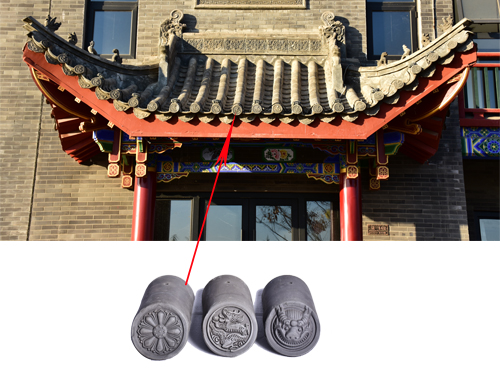
During the inspection or restoration of an old Chinese roof, the condition of the eave and drip tiles deserves particular attention. A missing drip tile can change the path of rainwater and increase water exposure to the wall. A loose eave tile may also affect the stability of adjacent roof tiles.
For restoration projects and modern buildings inspired by traditional Chinese architecture, correctly selected Chinese roof tiles, eave tiles, and drip tiles help reproduce both the appearance and functional principles of historical roof construction.
The details at the eaves demonstrate an important characteristic of traditional Chinese architecture: drainage, structural protection, and decoration are integrated into the same roof system. From the patterns molded on eave tiles to the carefully shaped lips of drip tiles, every element contributes to the performance and character of the traditional Chinese roof.