- Call Us :+86 13663796880
- Email :nicole@sfrooftile.com
- Working hours :24 hours a day
- Language :Chinese

Nicole Zhang
+86 13663796880
+86-379-63262958
nicole@sfrooftile.com
Traditional Chinese roof tiles are not simply decorative materials placed on top of a building. Behind the elegant curves and orderly tile lines is a highly developed roofing system created through centuries of architectural experience.
For architects, designers, and professionals involved in traditional architecture projects, understanding the arrangement, overlapping, and functional relationship between different tile components is essential for recreating an authentic Chinese roofing style.
At Dannuo Gardens, with decades of experience in traditional Chinese roof tile production, we understand that the beauty of Chinese roofs comes not only from the appearance of the tiles but also from the precise construction principles behind them.
When looking at the roof of a traditional Chinese building, the first thing that catches the eye is the series of neat, parallel tile ridges stretching like zither strings from the roof ridge down to the eaves.
Although located at the highest point of the building, the roof tile arrangement is the key factor determining whether the structure can effectively resist rainwater.
Without modern waterproofing membranes, ancient builders relied on the precise arrangement, overlapping, and interlocking of individual tiles to transform simple clay materials into a reliable protective layer for the building.
Traditional Chinese roof tiles generally fall into two categories:
Flat tiles are concave tiles with the curved surface facing downward, resembling a split bamboo tube. They are designed to guide rainwater downward.
Pan tiles are semi-cylindrical tiles with the curve facing upward. They cover the joints between flat tiles and provide additional sealing protection.
Together, these two tile types form the classic Chinese tiled roof system:
Rainwater travels along the concave surface of flat tiles and flows toward the eaves through the channels formed between the pan tile ridges.
The arrangement and overlapping method of roof tiles is the foundation of traditional Chinese roofing performance.
The standard practice involves the upper tile overlapping the lower tile by approximately 70%, leaving only around 30% exposed. Through this layered structure, rainwater remains on the tile surface and is prevented from flowing backward into the roof structure.
At the eaves, additional components including:
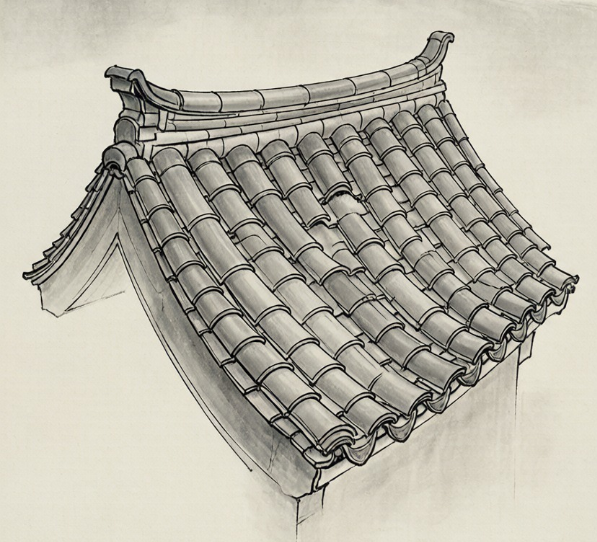
help guide final water discharge away from the wooden framework, protecting important structural elements such as:
This carefully arranged system demonstrates the practical knowledge developed by ancient craftsmen through long-term architectural experience.
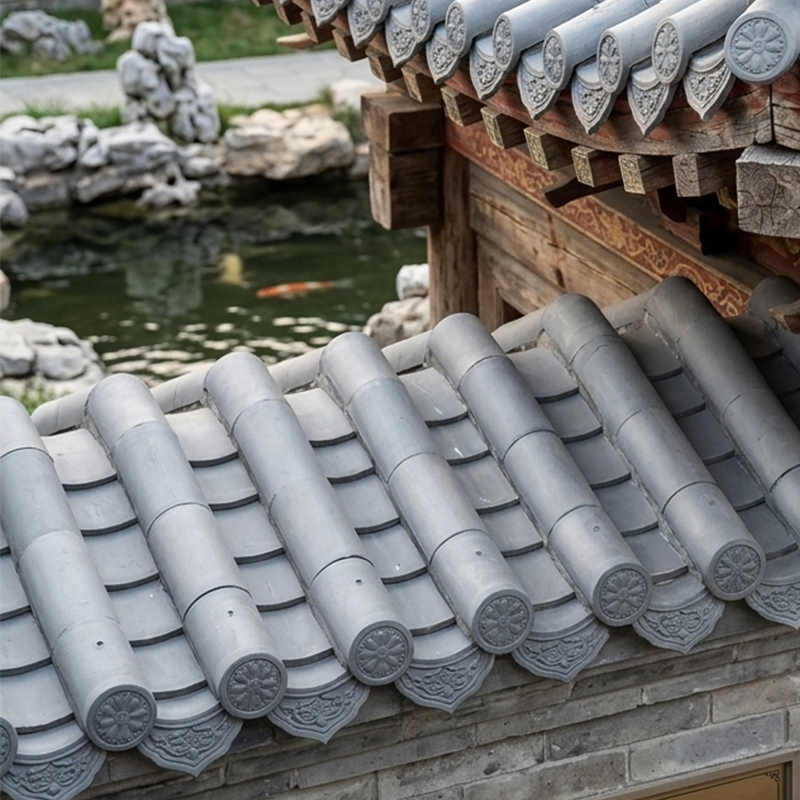
The pan-and-flat tile system is one of the most representative methods used in traditional Chinese architecture.
The concave flat tiles collect and guide rainwater, while the semi-cylindrical pan tiles cover the gaps between flat tiles.
This “yin-yang” combination creates a balanced system:
The result is an efficient roofing method refined through generations of traditional construction practice.
Alongside the pan-and-flat tile system, another traditional method is the 合瓦 (combined tile) system.
Also known as “yin-yang tiling,” this method uses two flat tiles arranged in alternating directions:
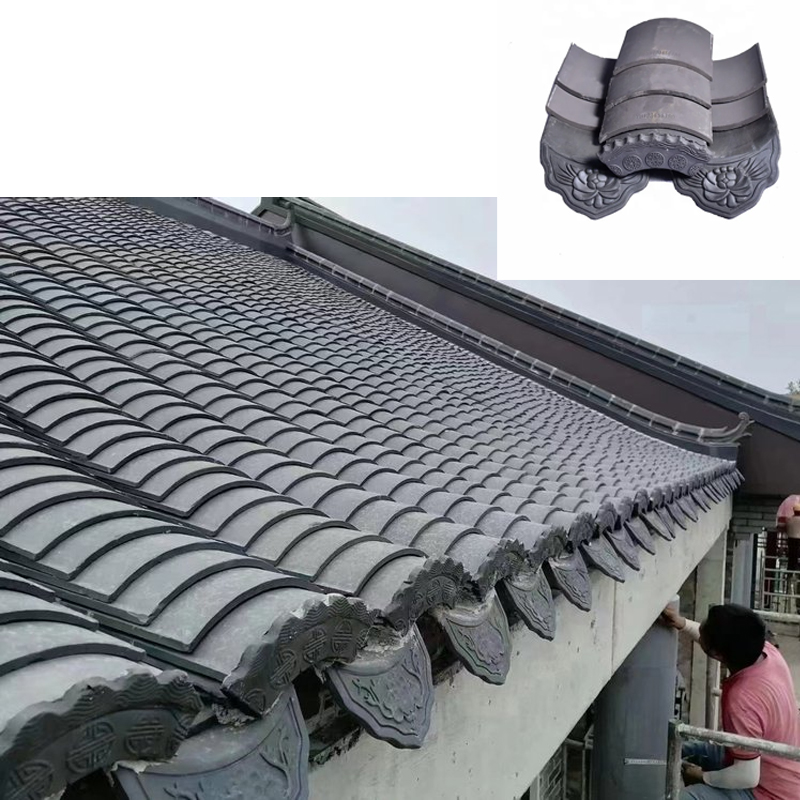
Compared with the pan-and-flat system, combined tile roofs feature softer lines and lower construction costs. This method was widely used in private residences and regional architectural styles, becoming one of the most common traditional roofing methods.
Regardless of whether the roof uses the pan-and-flat tile method or the combined tile method, accurate tile arrangement requires skilled craftsmanship.
Traditional tilers used guidelines on the bedding layer to maintain:
Because traditional Chinese roofs often feature curved surfaces, craftsmen needed to carefully adjust tile placement so that the tile ridges followed the roof shape naturally without appearing uneven.
A straight and symmetrical tile ridge remains one of the most visible indicators of traditional roofing craftsmanship.
The roofing system does not rely only on visible tiles. The hidden structure beneath the tiles is equally important.
Between the rafters and base tiles, craftsmen traditionally applied a bedding layer made from plaster and fiber materials.
This layer performs several functions:
The tile layer and bedding layer work together:
Together, they form the complete traditional Chinese roofing system.
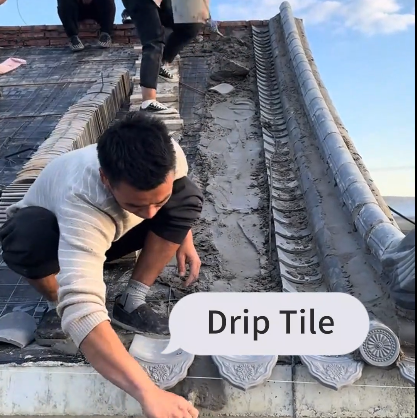
Traditional Chinese roofs contain many detailed components, including:
These elements are not only decorative. Many also serve practical purposes related to drainage, roof protection, and structural finishing.
At the same time, they carry cultural meanings, including protection, good fortune, and symbolic expressions within Chinese architecture.
The transformation of simple clay tiles into architectural art reflects an important philosophy of traditional Chinese design:
Function itself becomes decoration.
From the bedding layer beneath the tiles to the patterns on decorative eave tiles, every part of the roofing system has a specific role.
Although viewers mainly see the orderly rows of roof tiles, hidden beneath them is the accumulated knowledge of generations of craftsmen.
The pan-and-flat tile system and the combined tile system represent traditional Chinese architecture’s response to rainfall, climate, and structural requirements.
Through precise arrangement, overlapping techniques, and skilled craftsmanship, ordinary terracotta materials become a roofing system that combines function, aesthetics, and cultural value.
For architects and project owners seeking authentic Chinese architectural solutions, understanding these traditional principles is the foundation for preserving and recreating the beauty of Chinese roof design.